


Personalised Cap Ideas: Names, Nicknames and Little Sayings
27 October 2026

The best words for a personalised cap are often already part of your life. A nickname nobody else uses. The place you always go back to. A little saying that sounds exactly like someone you love.
In this guide
Look for words with a life behind them
When you start looking at personalised cap ideas, it is easy to think you need something original enough to belong on a poster. You don’t. A cap is a small everyday piece, and a familiar word can carry more feeling than a carefully invented slogan. The aim is to recognise the person, not to sum up their whole personality.
Look through the language you already share. What do you call each other at home? Is there a place that means more to your family than its name suggests? Which phrase appears in your messages every week? Write those down before searching for more ideas. The best starting point may be sitting in your phone already.
The suggestions below are prompts for your own wording, rather than a catalogue of fixed designs. Adapt them to suit your story, then check the current character limits and personalisation options on the Custom Text Hat. A small change can make an idea feel much more like you.
First names, nicknames and initials
A name is the simplest place to begin, and simplicity is part of its charm. You might use a full first name, a shortened version or the spelling only your family uses. Think about whether the wearer prefers an introduction or a quiet detail. “Alexandra” and “Lex” belong to the same person, but they say something different on a cap.
Nicknames often bring a little warmth without needing an explanation. A childhood name that stuck, a sibling’s mispronunciation or a pet name between friends can work beautifully. Be kind with the choice, particularly for a gift. The fact that a nickname makes everyone else laugh does not necessarily mean the person wants to wear it.
- A first name in the form they actually use.
- A familiar shortening, such as “Evie” or “Benji”.
- A single initial for a quieter detail.
- Two initials that have meaning to the wearer.
- A much-loved family nickname, with their blessing.
Read the exact spelling before you order. If an accent, symbol or unusual punctuation mark is important, check whether it can be embroidered in the chosen font. A name is a personal detail worth getting right.
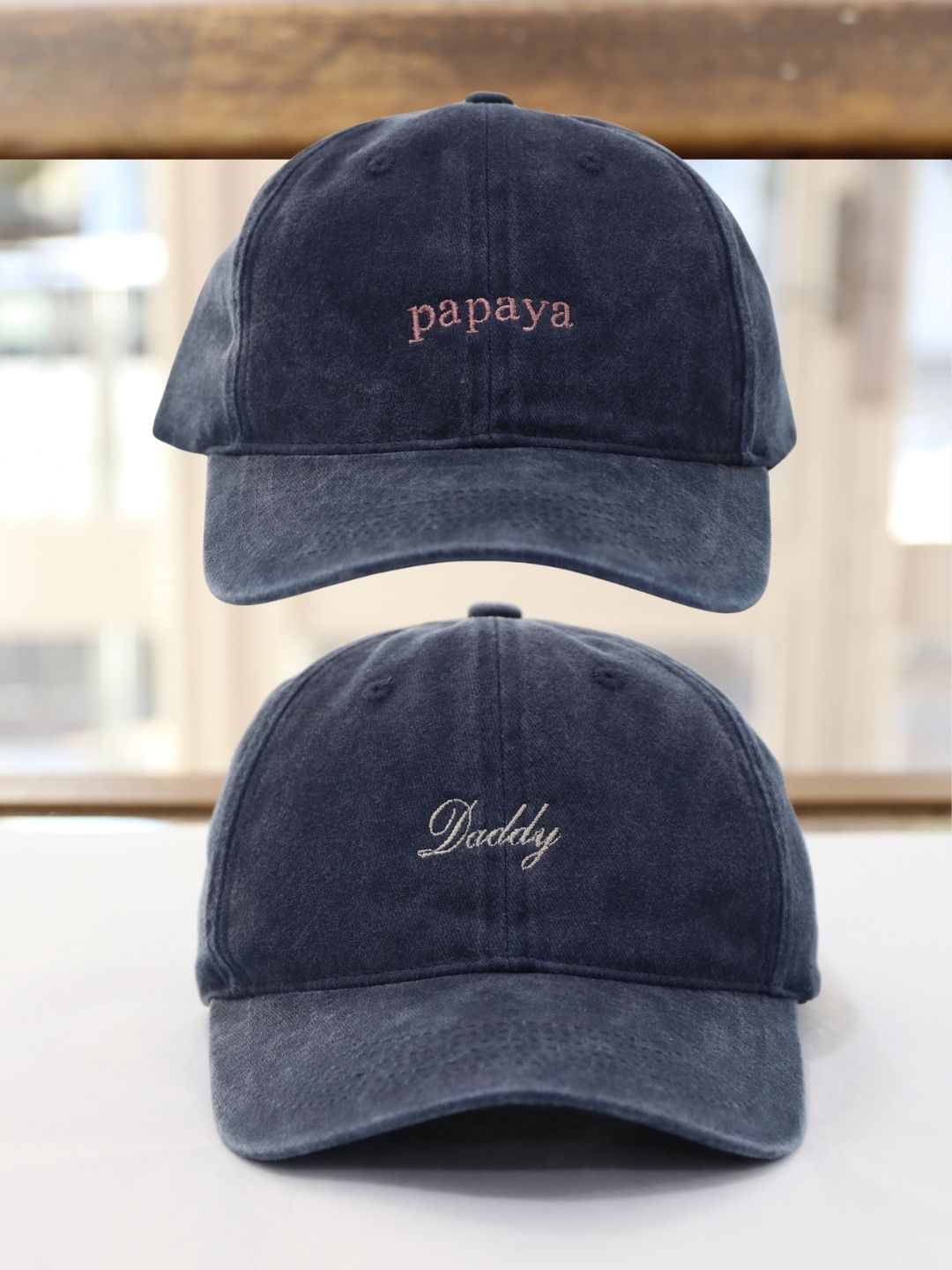
The names we grow into
Some words mark a new chapter. Mum, Dad, Nana, Pop and the many versions a family makes its own can feel very special when they are still new. They can also be lovely years later, when the title has become so familiar that nobody stops to notice it.
Rather than choosing the most common version, use the name the person answers to. That might be “Māmā”, “Oma”, “Grandad” or a name invented by a small child. Check any letters or accents with the studio before ordering. The point is to reflect the relationship as it really is, rather than make it fit a generic gift phrase.
For a family set, shared lettering can create a connection without making every cap identical. Each person could have their own title, nickname or initial in a similar style. Keep the wearer’s preferences in mind: a bold front word suits some people, while a small back detail may feel more natural to someone who likes things understated.
Favourite places and ordinary rituals
Place names can hold a whole memory in a few letters. A beach you visit every summer, a street where you first lived together or the name your family gives the bach can all be starting points. It does not have to be a famous destination. Often the less obvious name is the one that feels most personal.
Everyday routines are another lovely source of cap designs. Think about what you do when there is no occasion to dress for: a walk before breakfast, a weekend garden session or a slow coffee on the way home. The wording can be playful without pretending to be an official club.
- “Morning Walk” for the person who is out the door early.
- “Garden Club” for someone happiest with their hands in the soil.
- “Sunday Crew” for a small group with a standing catch-up.
- “Slow Mornings” for a gentler sort of weekend.
- A short place name with a story only your people know.
These are ideas to adapt, not instructions to add every word you like. Pick the one that brings a clear picture to mind. If you need a paragraph to explain it to the wearer, another phrase might be a better fit.
Little sayings and shared jokes
A few words can sound unmistakably like someone. Perhaps they always say “See You Soon”, or insist that every plan needs “One More Coffee”. A phrase with a familiar rhythm can make a cap feel personal without using a name at all.
Start with the words themselves, then read them as though you had never heard the story. Would you still feel comfortable wearing them in public? Keep jokes affectionate, and avoid a line that relies on embarrassing someone. The best shared jokes let the wearer decide how much of the story to tell.
Try writing a long phrase in two or three shorter forms. “Just taking the long way home” could become “Long Way Home”. A whole holiday memory might reduce to a place and a year. You are looking for the small part that brings back the rest, rather than a complete explanation stitched across the front.
If you are adding a date, double-check the numbers and consider a clear format. A year can be enough. Numeric dates can be read differently across countries, so spelling out a short month may be clearer if it fits the product options.
Turn your shortlist into something wearable
Once you have three or four ideas, imagine each on the wearer’s usual cap colour. Which feels natural with their everyday clothes? Which would they still enjoy in six months? A personalised cap can be a keepsake without feeling too precious to leave the house.
Give the wording room. Short text often lets the font and thread do more of the work. A block style can feel direct and playful; a script may feel softer; a serif can bring a familiar, considered look. Use the actual product examples when deciding, because a font changes character depending on the letters in your phrase.
Choose contrast to suit the wearer, too. Light thread on a dark cap makes the words easier to notice. A quieter pairing can make the design feel like a detail discovered up close. If one colour is not quite the idea you have in mind, explore the Multi-Colour Text Cap and its current options.
For help with the practical choices, read how to customise a cap. That guide covers fit, placement and the final order check. If your idea is an image instead of words, browse the custom text and image hats to find the right starting point.
A final check for a thoughtful result
Before ordering, show the shortlist to someone who knows the wearer well, if doing so will not spoil the surprise. Ask which sounds most like them, rather than which is the cleverest. If you are choosing for yourself, give the decision a little time. The phrase you keep coming back to is often the right one.
Check spelling, capitalisation, placement and the available space before adding the cap to your cart. Read current making and shipping information in the FAQs if you have a date in mind. For a phrase outside the listed options, ask the studio first. Then keep the finished piece in everyday rotation, following the hat care guide when it needs a little attention.
Frequently asked questions
What should I put on a personalised cap?
Start with a name, nickname, family title, meaningful place or a short phrase you already use. Choose wording the person will enjoy wearing, rather than trying to fit their whole story onto the cap.
Are initials a good alternative to a full name?
Initials can make a quieter personal detail. Check their order and the product’s font examples, then choose a placement and thread colour that suit how noticeable you want the design to be.
How do I choose wording for a cap as a gift?
Use the recipient’s own language and preferences. A familiar nickname or everyday phrase usually feels more personal than a generic slogan. Avoid jokes they might find embarrassing, and double-check the spelling.
Can I put a short phrase on the back of a cap?
Namesake’s Custom Text Hat offers a back-text option, currently with a 12-character field. Check the live product details and any added cost, and shorten your phrase if it needs more room.
What if my idea needs more characters or special lettering?
Contact Namesake before ordering to discuss what is possible. Don’t assume a longer phrase, special character or different font can be added through an order note.
A few words, made personal
Create your text hat


